
RESEARCH
Pioneering cutting-edge research at the intersection of hardware, AI, and materials science to develop next-generation computing and sensing technologies through an interdisciplinary design approach spanning electronics, photonics, quantum science, and machine learning.
RESEARCH AND DEVELOPMENT
Our researchers work in cross-disciplinary teams that leverage the latest technical advances to develop innovative solutions.
Algorithm Development
Our laboratory develops comprehensive artificial intelligence frameworks that address diverse challenges across materials science, language processing, and edge computing. Through advanced machine learning algorithms and specialized architectures, we create practical, domain-specific AI solutions that are accurate, computationally efficient, and deployable in real-world environments.
.05pmw9dl-.glv.jpg&w=2048&q=75)
AI for Accelerated Materials Discovery
Our laboratory develops comprehensive artificial intelligence frameworks that integrate multiple disciplines including deep learning, machine learning, generative AI, large language models, natural language processing, and data science to revolutionize materials research and discovery. We focus on creating end-to-end AI-driven solutions that span the entire materials development pipeline, from inverse design approaches that identify materials with target functionalities to advanced prediction models for critical properties such as formation energies, phonon dispersions, and molecular dynamics behavior. Our research encompasses synthesizability prediction models that guide experimental feasibility, high-throughput screening methods that accelerate materials characterization, and intelligent recipe recommendation systems that optimize synthesis pathways. By combining first-principles density functional theory calculations with state-of-the-art machine learning algorithms, we bridge the gap between computational predictions and experimental validation, enabling rapid discovery and optimization of materials for energy storage, catalysis, electronics, and other technological applications. This interdisciplinary approach leverages the power of modern AI to transform traditional materials science workflows into efficient, predictive, and autonomous discovery platforms.
Practical and Domain-Specific LLM Development
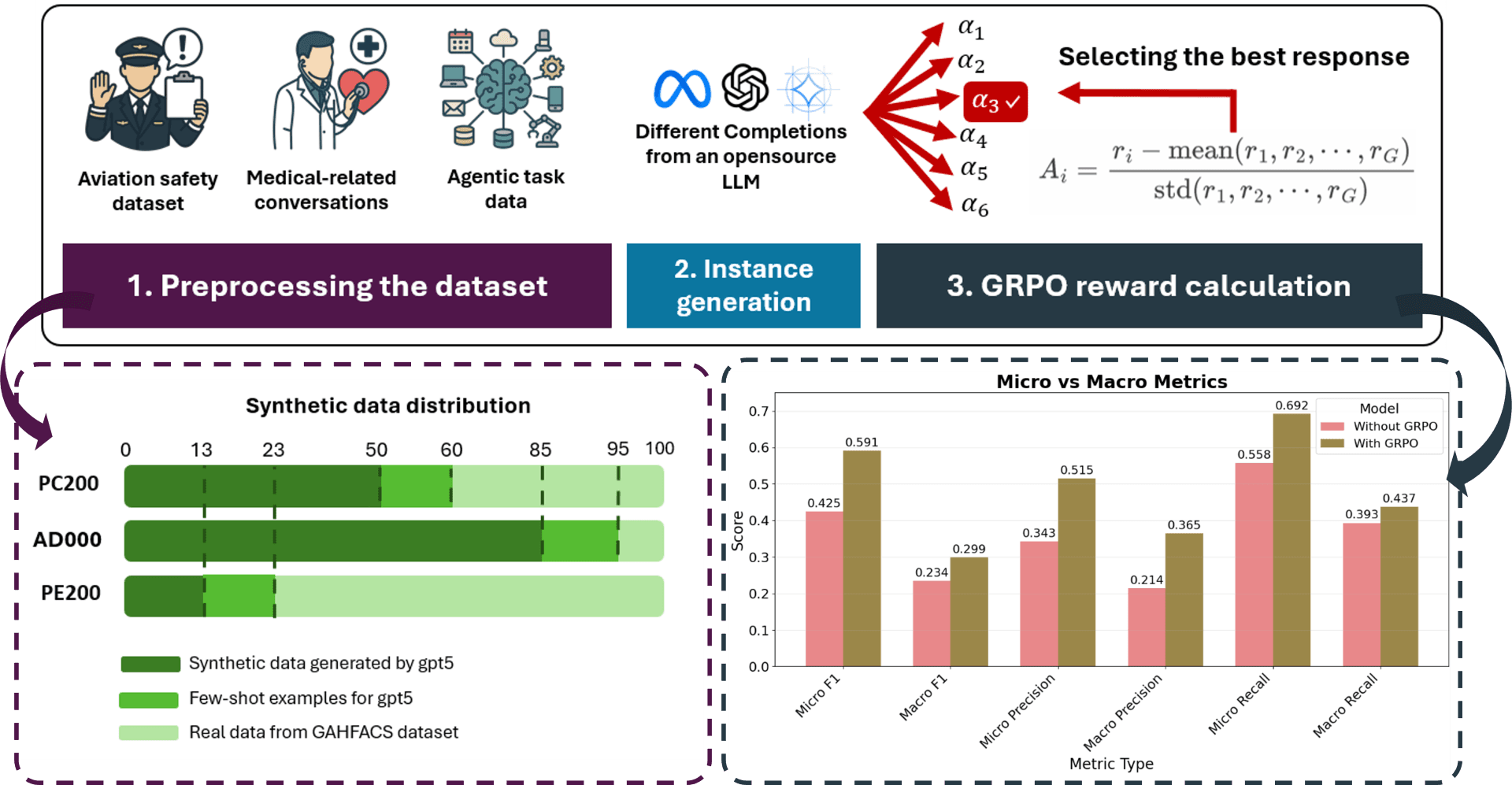
Our laboratory develops artificial intelligence frameworks that integrate reinforcement learning, federated learning, and large language models to build specialized and efficient systems. We create automated safety analysis tools for aviation by fine-tuning language models with reinforcement learning to classify human factors in accident reports. Our work also includes privacy-preserving health monitoring systems that use federated learning, and we investigate data sampling methods to improve model performance on imbalanced datasets. Additionally, we architect lightweight, model-agnostic proxies that connect language models with external tools, enabling their deployment on resource-constrained platforms such as mobile and edge devices. This research focuses on creating practical, domain-specific AI solutions that are accurate, computationally efficient, and deployable in real-world environments.
Hybrid Quantum Machine Learning
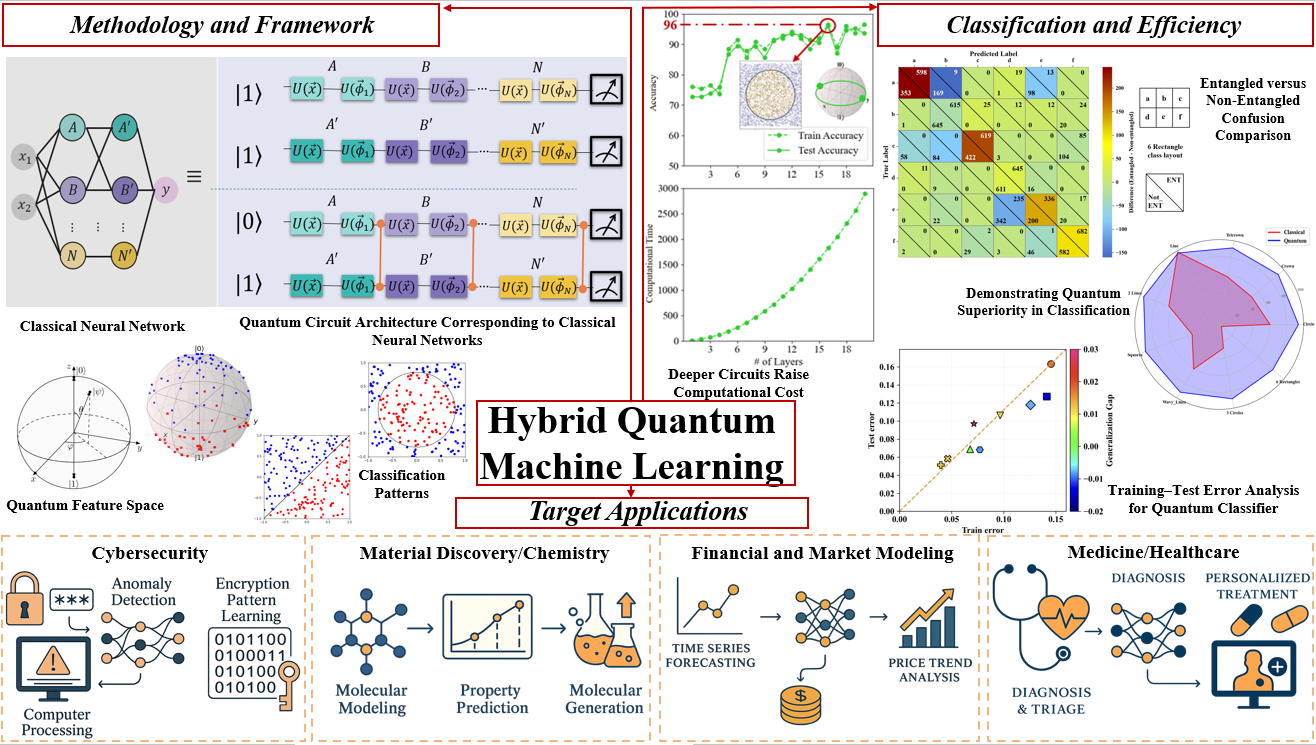
Our research focuses on the development of advanced hybrid quantum-classical algorithms that bridge traditional machine learning and emerging quantum computing paradigms. We design quantum machine learning frameworks that leverage variational circuits, quantum feature spaces, and entanglement-based representations to address complex problems in cybersecurity, medicine, and materials discovery. Current efforts involve algorithmic innovation in quantum-enhanced classification, with an emphasis on interpretable and resource-efficient designs. Moving forward, our work aims to extend these theoretical and simulation-based models onto real quantum hardware, validating their scalability and robustness under physical constraints. By integrating algorithmic theory, quantum information science, and applied AI, our research seeks to establish practical pathways toward quantum-accelerated intelligence for secure, data-driven, and discovery-oriented applications.
Neuromorphic Computing Hardware Design
Our research focuses on developing bio-inspired computing systems that bridge the gap between biological neural networks and practical hardware implementations. Through novel architectures and energy-efficient designs, we create neuromorphic systems that enable intelligent computation while drastically reducing power consumption.
Bridging Biological Intelligence with Neuromorphic Hardware for AI Acceleration
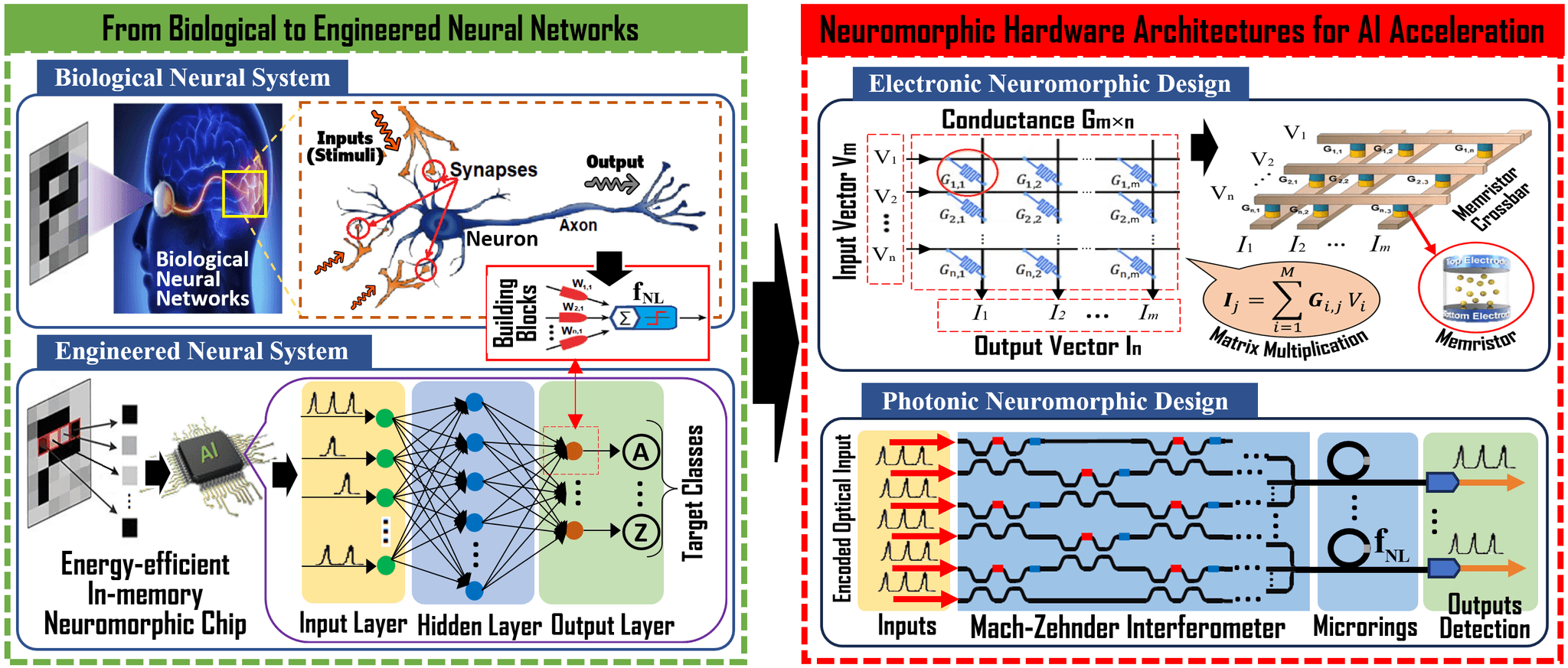
Our research explores the transformation from biological neural systems to engineered neural networks, with a focus on energy-efficient neuromorphic computing architectures. Inspired by the brain's synaptic processing, we develop novel hardware implementations that emulate neuron-synapse behavior for AI tasks.
We investigate two main directions:
• Electronic Neuromorphic: Design using memristor crossbars for in-memory analog matrix multiplication, enabling parallel, low-power computation.
• Photonic Neuromorphic: Design leveraging Mach-Zehnder Interferometers and microring resonators for ultrafast, light-based neural computation with programmable nonlinear activation.
By combining bio-inspired models with next-generation hardware—including both electronic and photonic substrates—we aim to accelerate AI performance while drastically reducing energy consumption.
For more details about each project, please check our publications.
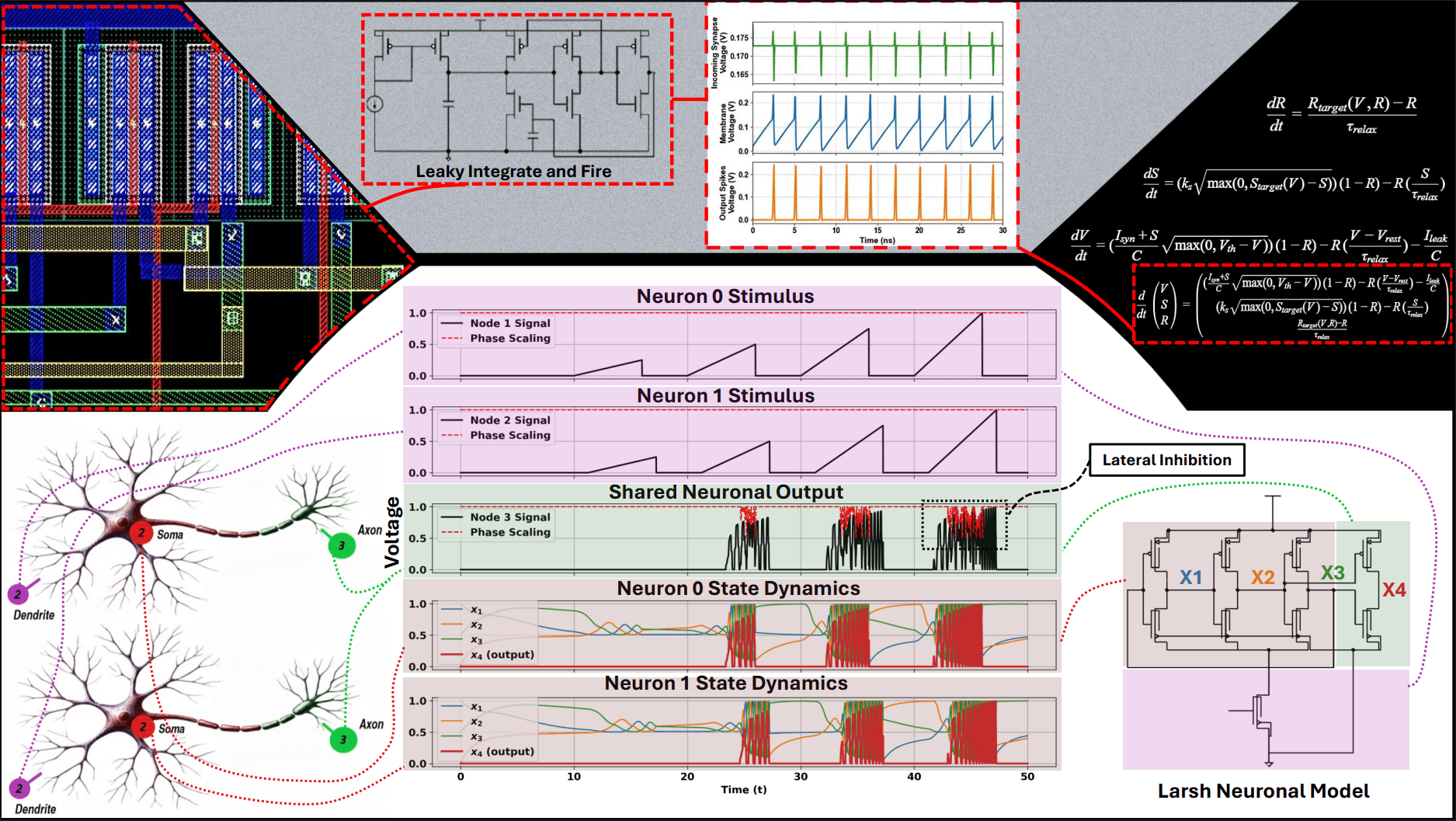
Energy-Efficient Neuronal Circuits for Hardware-Level Training
Our research explores a novel neuromorphic architecture designed to overcome the challenges of training hardware-level neuronal circuits while minimizing the escalating power demands typically required for plasticity modulation. This model enables in-network training while significantly reducing reliance on bulky capacitive and resistive elements, thereby advancing efficiency and scalability. In addition, the architecture supports dynamically addressable neuronal pathways, allowing for the construction of a wide range of large-scale and diverse network structures. By integrating mechanisms inspired by biological processes—such as neuronal resonance, lateral inhibition, and spiralization—the framework demonstrates how reasoning can be achieved directly in hardware. Ultimately, this approach provides a foundation for energy-efficient, large-scale neuromorphic systems that bridge the gap between biological inspiration and practical hardware implementation.
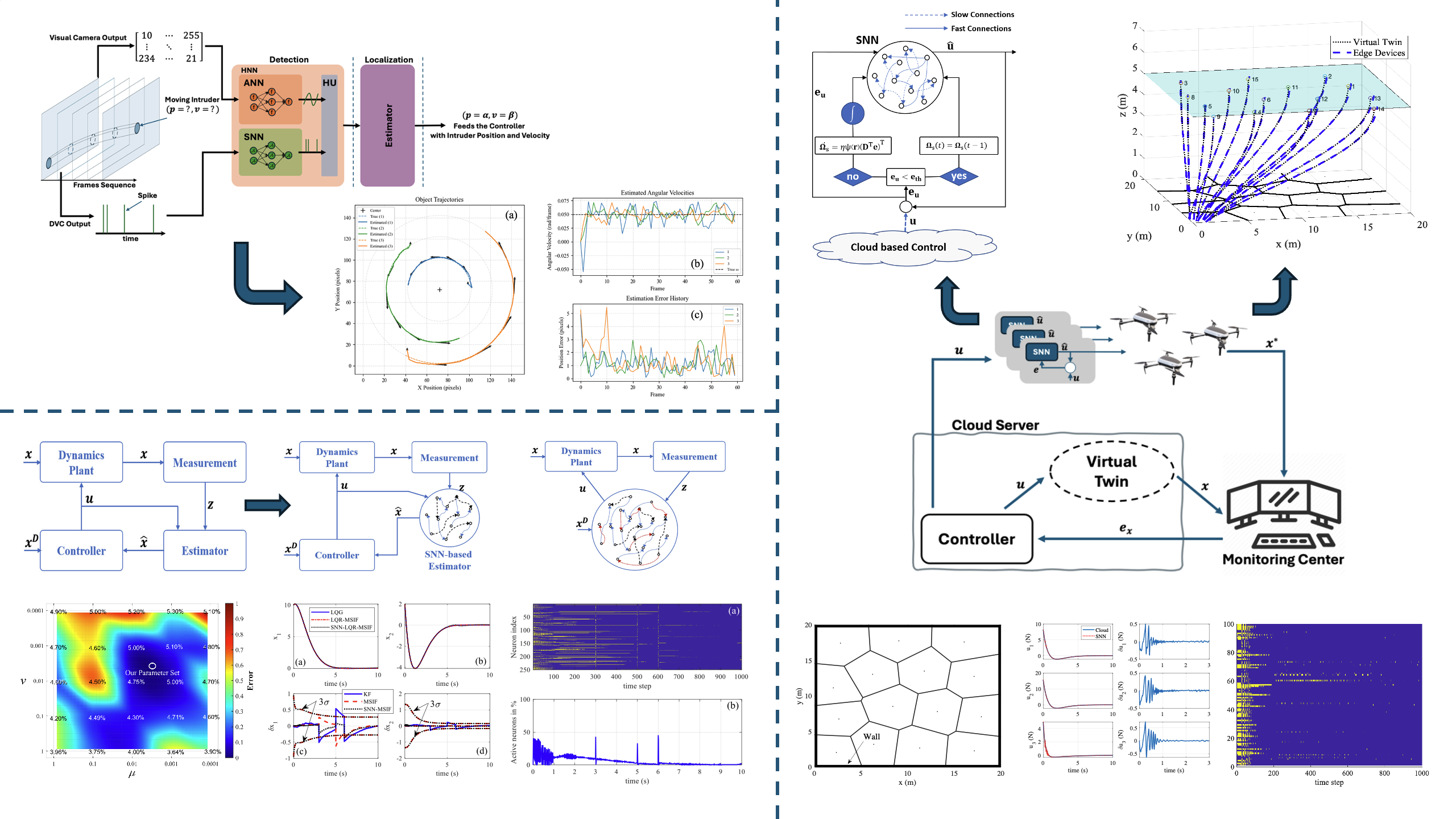
Neuromorphic Estimation, Perception and Control
Our research advances neuromorphic intelligence for autonomous systems through various complementary studies that collectively establish the foundation for fully event-driven estimation, perception, and control in aerial and robotic applications.
• The first study, Event-Based Heterogeneous Information Processing for Vision-Based Obstacle Detection and Localization, develops a hybrid ANN–SNN vision model that fuses continuous deep-learning pathways with spike-driven temporal encoding for dynamic scene understanding. By combining spatial feature extraction and event-based motion cues, this framework achieves real-time obstacle detection and localization, enabling energy-efficient perception for UAVs and robotic systems operating in complex and visually dynamic environments.
• The second study, Neuromorphic Robust Framework for Integrated Estimation and Control, introduces the SNN-LQR-EMSIF, a spiking neural network formulation of the Extended Modified Sliding Innovation Filter integrated with optimal control laws. This architecture performs simultaneous state estimation and control signal generation directly from neural spike dynamics, offering real-time adaptability, stability under uncertainty, and substantially reduced computational demand compared to conventional Kalman-based approaches.
• The third study, Neuromorphic Digital-Twin-Based Controller for Multi-UAV Deployment, establishes a distributed cloud-edge control architecture where each UAV is equipped with an individual SNN capable of learning and reproducing cloud-generated control commands. This digital-twin framework maintains formation control and collision avoidance even under communication loss, ensuring resilient, congestion-free coordination across swarms of UAVs operating in three-dimensional urban or indoor spaces.
Together, these research directions form a unified neuromorphic paradigm that bridges robust estimation, event-driven perception, and decentralized control. They demonstrate how biologically inspired neural computation can transform traditional robotic workflows into adaptive, scalable, and energy-efficient autonomous systems.
Physics informed Inverse Design
Our research leverages inverse design principles, AI-driven optimization, and computational techniques to accelerate the discovery and engineering of novel materials and sensing systems. By combining generative models, first-principles calculations, and advanced material characterization, we develop innovative solutions for scientific discovery across multiple domains.
.0-0f95o5r3d7o.jpg&w=2048&q=75)
Generative Models for Materials Innovation
Our research focuses on developing advanced machine learning frameworks for materials discovery and design powered by generative artificial intelligence. We leverage variational autoencoders (VAEs) and generative adversarial networks (GANs) to capture complex representations of materials in both real and latent space, enabling the prediction and generation of novel structures with targeted properties.
To ensure the physical validity and stability of generated candidates, our computational pipeline integrates multiple validation approaches, including density functional theory (DFT) calculations and ALIGNN pre-evaluation methods. The framework combines training processes that minimize formation energy predictions with critic–discriminator networks that assess material feasibility using Wasserstein distance metrics.
This approach allows us to efficiently explore vast chemical spaces, reconstruct materials from compressed representations, and propose new candidates that can be systematically validated through first-principles calculations. Ultimately, our work accelerates the discovery of functional materials for energy, electronics, and other emerging technologies.
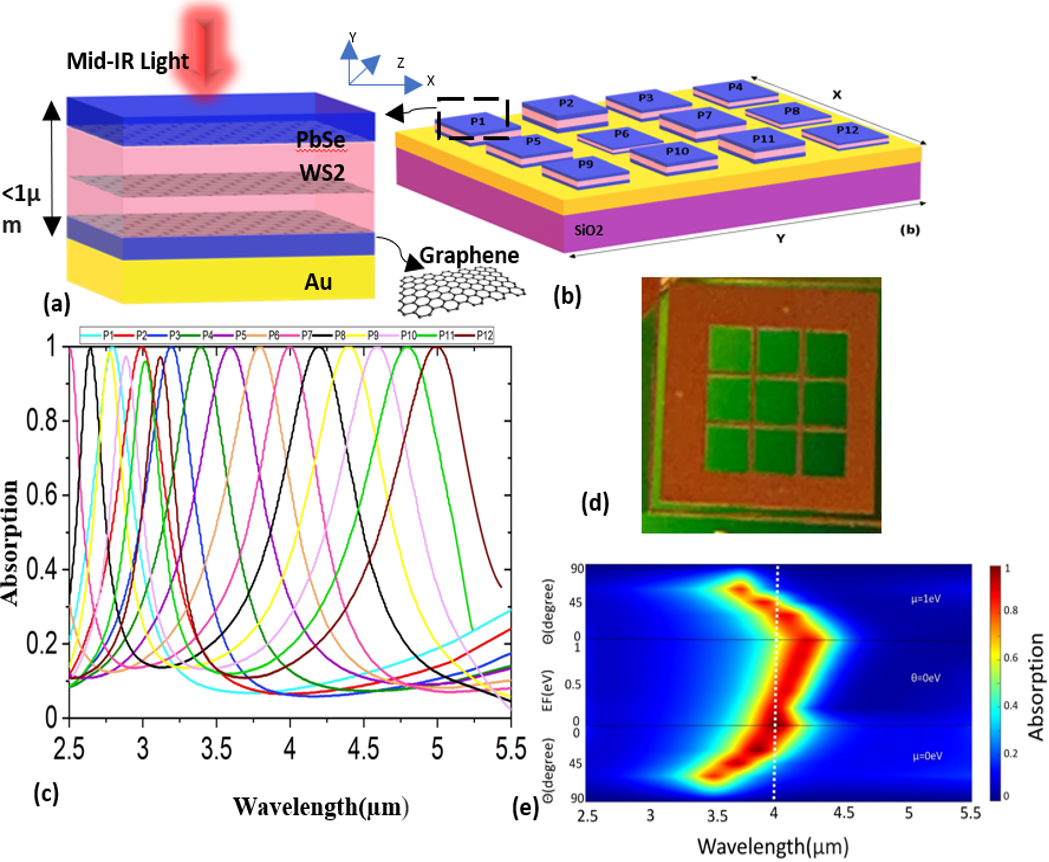
Engineering Light-Matter Interactions via Aperiodic 2D Material Nanophotonics
Our research investigates the design and optimization of aperiodic multilayer nanophotonic structures that harness the extraordinary optical, electronic, and plasmonic properties of two-dimensional (2D) materials to engineer precise, tunable light-matter interactions across the mid-infrared spectrum. Unlike conventional periodic architectures, our approach employs deterministically aperiodic layer configurations where spectral responses are governed entirely by optimized thickness profiles and material selection, decoupling performance from fabrication complexity and enabling diverse functionalities. At the core of our methodology is a hybrid inverse design framework coupled with rigorous electromagnetic solvers, while the integration of 2D materials and van der Waals heterostructures introduces active tunability through electrostatic or optical modulation. This fundamental physics-informed platform is broadly applicable across infrared sensing, adaptive filtering, programmable thermal emission, phase-change-material-based switching, stealth systems, and photonic integrated circuits.
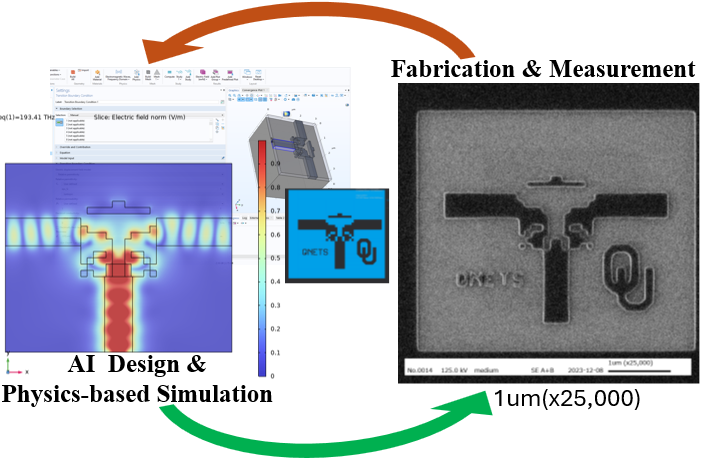
Closed-Loop Intelligent Nanophotonic Circuits Design
We are developing inverse-designed photonic integrated circuits that tightly couple AI-driven electromagnetic simulation with rapid fabrication and measurement. Using differentiable solvers, adjoint optimization, and learning-guided search, our methods automatically discover device geometries that achieve target responses—compact couplers, filters, resonators, and nonlinear/quantum photonic elements—while honoring layout and process rules. A closed design–fabrication–test loop lets us validate models, update priors with measured data, and push performance beyond manual tuning. The result is smaller footprints, wider bandwidths, and robust tolerance to variability, accelerating translation from concept to chip.
2D Material–Based Next-Generation Magnetic Sensing
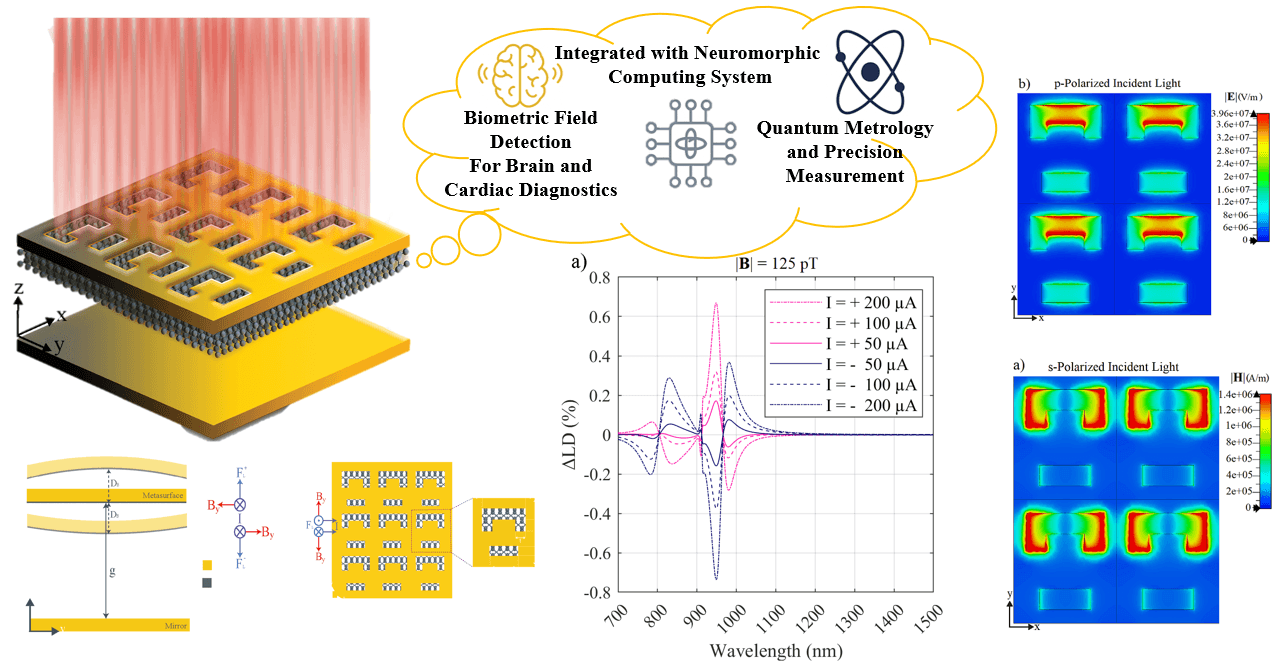
Our group is pioneering the development of solid-state optical magnetometers that integrate two-dimensional (2D) materials with engineered metasurface cavities to achieve highly sensitive magnetic field detection at the nanoscale. By leveraging the unique anisotropic optical properties of 2D materials, these devices overcome the size, power, and cooling limitations of conventional superconducting and atomic-based magnetometers. Guided by inverse design principles, our approach optimizes material–device interactions to achieve a compact, room-temperature platform capable of sub-nanotesla sensitivity, vector field detection, and ultra-low power consumption. This work not only opens new opportunities for biomagnetic sensing, neuromorphic systems, and quantum metrology but also establishes a scalable pathway for miniaturized, high-resolution magnetic field sensors suitable for biomedical, industrial, and space applications.
Congestion-Free Multi-UAV Autonomy
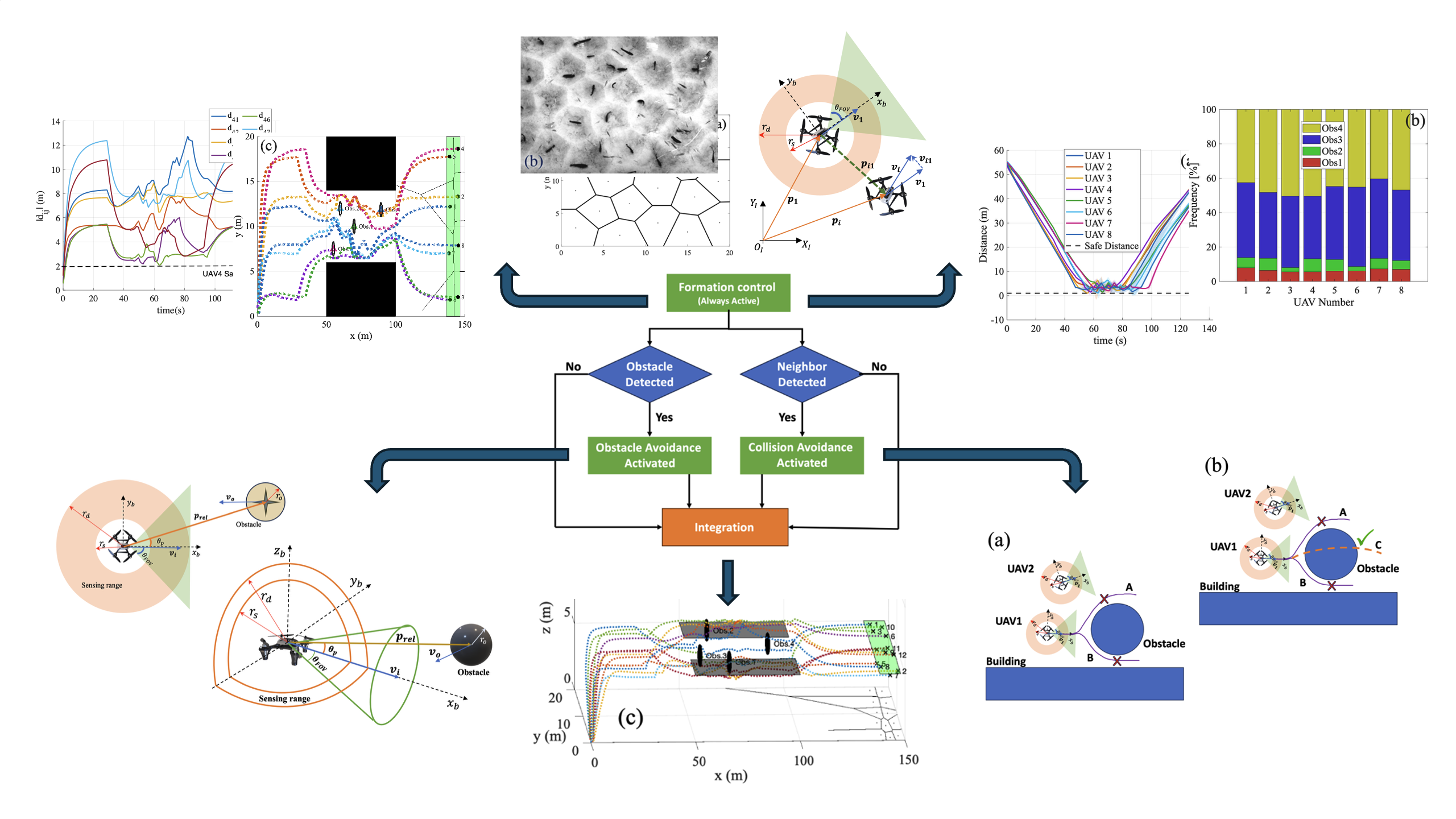
Our research develops an advanced multi-algorithm control framework for autonomous multi-UAV systems that integrates biological inspiration with rigorous mathematical modeling to achieve reliable, collision-free operation in dynamic 3D environments. The framework combines a probabilistic Lloyd’s algorithm for optimal formation control based on centroidal Voronoi tessellation, an elastic-field collision avoidance algorithm that models inter-vehicle interactions through adaptive spring-damper dynamics, and a pigeon-inspired 3D obstacle detection and avoidance algorithm that introduces a new dimension of maneuverability. Unlike conventional planar approaches that often experience congestion and temporary stagnation when agents share a single motion plane, the proposed algorithm enables UAVs to autonomously generate non-planar escape trajectories through conical field-of-view modeling, gradient-based potential fields, and spatial rotation matrices. This added vertical degree of freedom allows vehicles to resolve local conflicts, maintain formation integrity, and ensure smooth recovery after avoidance maneuvers. Extensive Monte-Carlo simulations demonstrate 100% mission success across complex urban scenarios, validating the scalability, adaptability, and safety of the proposed algorithmic framework for next-generation cooperative aerial missions.
Quantum Photonic Sensing and Communication
Quantum Photonic Sensing and Communication
Microwave Quantum Memory based on rare-earth materials
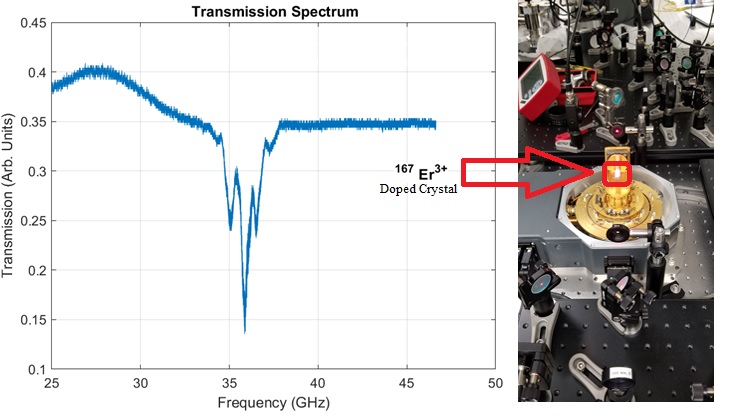
Our group investigates rare-earth-doped crystalline materials as a promising platform for microwave quantum memory and microwave-to-optical quantum transduction. Practical quantum information processing requires memory systems that can store and retrieve microwave photons, particularly because many quantum information platforms operate in the microwave regime while still facing challenges related to coherence time, spectral broadening, and scalable integration.
Rare-earth ions embedded in solid-state hosts offer a unique pathway toward long-coherence quantum interfaces because of their long spin coherence times, high emitter densities, and optical addressability. In this project, we focus on rare-earth isotopes with GHz-scale hyperfine splittings, including ¹⁶⁷Er³⁺, ¹⁴⁵Nd³⁺, and ¹⁷¹Yb³⁺, incorporated into yttrium-oxide crystalline hosts. These material systems are being studied as candidates for microwave-regime quantum memories due to their favorable spin-transition properties and compatibility with optical spectroscopic characterization.
A central goal of this research is to understand and minimize inhomogeneous broadening in rare-earth spin transitions, which is a key requirement for efficient microwave quantum memory protocols. Our work combines cryogenic spectroscopy, magnetic-field-dependent measurements, concentration-dependent studies, and host-material comparison to determine how temperature, magnetic field, dopant concentration, and crystalline environment influence the hyperfine-state linewidths. The resulting insights guide the design of future rare-earth-based quantum memory devices and support the development of solid-state quantum interfaces for quantum communication, sensing, and information processing.
Data Intelligence for Quantum Optical Sensing
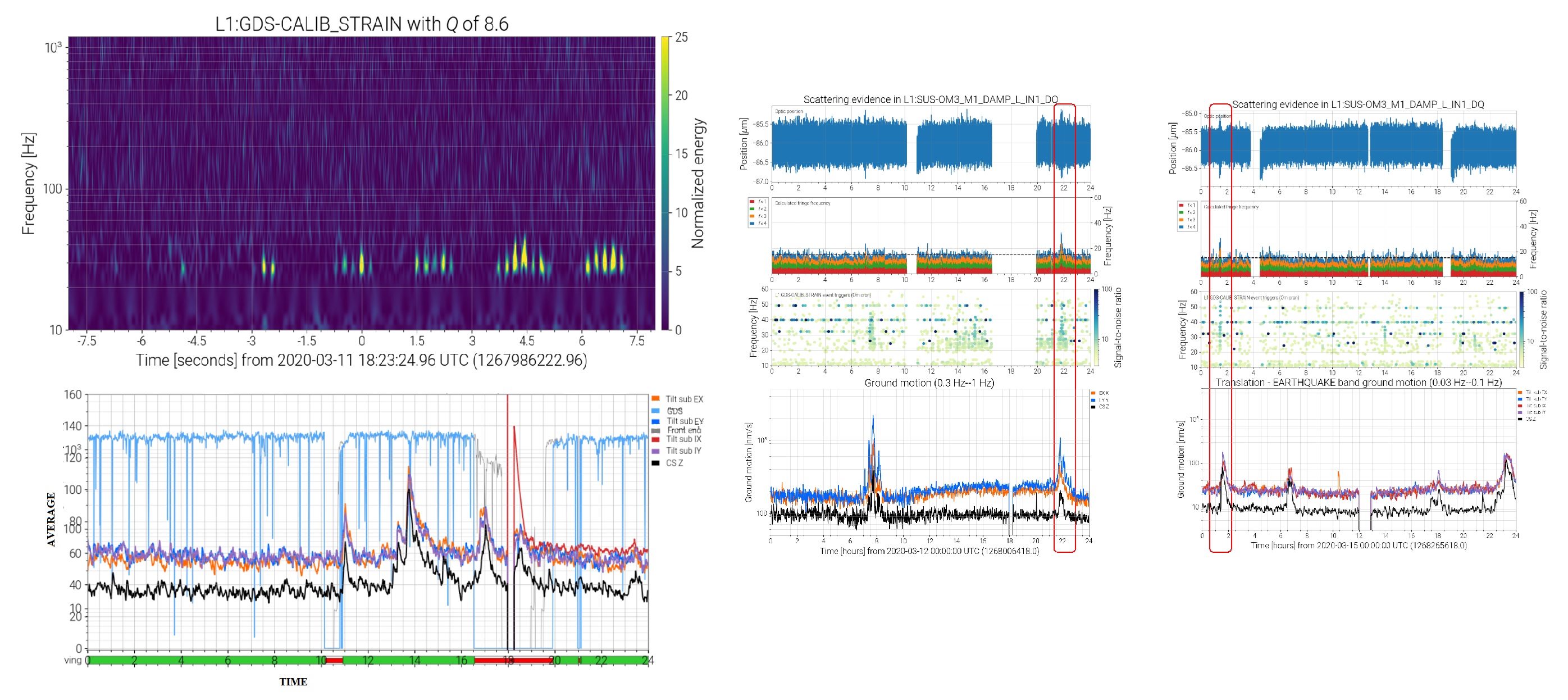
Our group develops data-driven methods for quantum optical sensing and high-precision interferometric measurement, with applications inspired by gravitational-wave observatories such as LIGO. These systems rely on laser interferometry to detect extremely weak physical signals that are often hidden within complex environmental and instrumental noise.
This project focuses on signal processing, machine learning, and algorithm optimization for separating weak target signals from high-dimensional sensor data, including seismic motion, acoustic disturbances, detector glitches, and environmental fluctuations. The broader goal is to advance intelligent analysis frameworks for quantum-enabled sensing, communication, and precision measurement platforms.
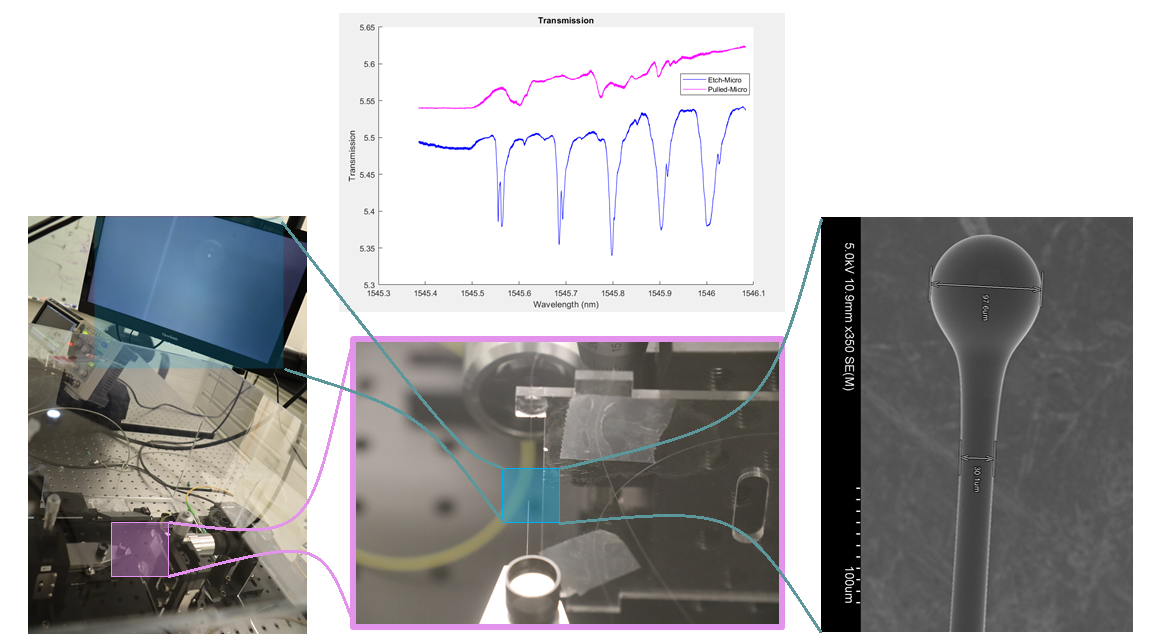
Rare-Earth Light-Matter Interfaces Using Microsphere Resonators
Our group develops rare-earth-based quantum photonic interfaces using microsphere resonators to enhance light-matter interaction for quantum communication, quantum memory, and quantum repeater technologies. Long-distance quantum communication is currently limited by optical loss, scalability challenges, and the difficulty of preserving quantum states over extended fiber-optic links. Rare-earth atoms and ions in solid-state hosts provide a promising platform because of their long coherence times, optical addressability, and compatibility with photonic resonator structures.
This project focuses on designing, fabricating, and characterizing whispering-gallery-mode microsphere resonators that can strongly confine optical fields and increase interaction between photons and rare-earth quantum emitters. By coupling microsphere resonators to tapered optical fibers, the platform aims to efficiently transfer light from nanoscale or microscale cavities into propagating fiber modes. The research combines microsphere fabrication, fiber tapering, optical transmission measurements, numerical mode simulations, data analysis, and high-performance computing to optimize resonator performance and light extraction efficiency.
The long-term goal is to establish scalable rare-earth light-matter interfaces for future quantum memory, quantum repeater, and quantum communication systems.
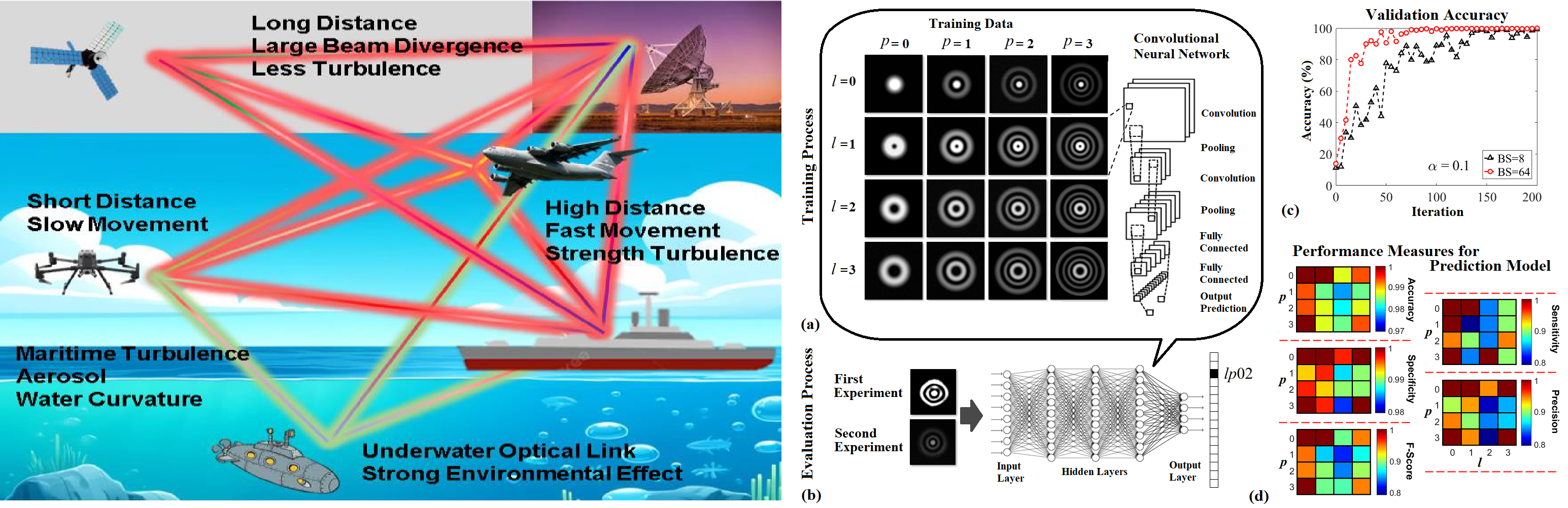
AI-Enabled Detection of Orbital Angular Momentum and Superposition States of Light
Our group develops new frameworks for orbital angular momentum light, with a focus on OAM superposition states for high-capacity and secure optical communication. OAM beams use the helical phase structure of light to carry multiple information channels, offering a promising pathway for free-space optical communication, quantum communication, sensing, and imaging.
This project combines optical experimentation with AI-driven analysis to generate, manipulate, and detect OAM modes and their superpositions. The experimental platform explores new OAM superposition modes to increase data-carrying capacity while reducing modal crosstalk and interference. In parallel, machine-learning algorithms, including convolutional neural networks, are developed for automated OAM mode classification and real-time detection under practical experimental conditions.
The long-term goal is to enable adaptive, scalable, and secure OAM-based photonic systems that can support next-generation quantum optical communication, sensing, and high-dimensional information processing.
Interdisciplinary Collaboration
Our interdisciplinary research team collaborates across these domains to develop integrated solutions that leverage advances in hardware, algorithms, and materials to address complex challenges in computing, sensing, and control applications.
Interested in collaborating with us?
GET IN TOUCH